YouTube Sponsorships: The Complete Guide for Creators and Brands (2026)
A YouTube sponsorship is a paid partnership where a creator promotes a brand's product in their video in exchange for money, free product, or affiliate commission. That single sentence covers a $35B+ global industry. It has seven distinct deal types, five payment models, and a regulatory layer that varies by country.
This guide is the encyclopedia. It covers what a YouTube sponsorship is and every deal type and payment model in use in 2026. It also covers the contract structure, FTC and global disclosure rules, the agents and platforms in the market, and how creators and brands find each other today.
Quick Reference
- Definition: Paid partnership between brand and creator with FTC-mandated disclosure.
- Deal types: Dedicated video, integration, affiliate, product seeding, BrandConnect, ambassador, channel membership.
- Payment models: Flat fee, CPM, CPA, hybrid, equity / revenue share.
- Typical CPM: $15-$80 for integrations (niche-dependent), 1.3-1.5x that for dedicated videos.
- Required disclosure: ‘Paid promotion’ toggle + verbal/text mention.
- Discovery paths: Inbound, marketplace, agency, outbound (Sponsor Intelligence).
Real Sponsorship-Heavy Channel Breakdowns
Before the deal types, look at the raw numbers behind channels that run on sponsorship revenue: outlier videos, upload cadence, and revenue estimates.
OutlierKit Channel Analysis
The Diary Of A CEO
High-Performance Lifestyle & Ideas
- Subscribers
- 17.8M
- Avg views
- 1.9M
- Total views
- 1.6B
OutlierKit Channel Analysis

Chris Williamson
Interview podcast
- Subscribers
- 4.3M
- Avg views
- 263.0K
- Total views
- 1.2B
OutlierKit Channel Analysis

Bad Friends
Comedy podcast
- Subscribers
- 2.4M
- Avg views
- 886.6K
- Total views
- 798.8M
Stats are from our most recent snapshot of each channel. For live numbers, outlier videos, and up-to-date revenue estimates, run a fresh analysis on OutlierKit →
What Is a YouTube Sponsorship?
A YouTube sponsorship is a paid commercial partnership between a creator and a brand. The creator promotes the brand's product or service inside their video content in exchange for compensation. The compensation can be cash, free product over a nominal threshold, an affiliate commission, equity, or a combination.
What sets a YouTube sponsorship apart from a YouTube ad is that the creator produces and endorses the content themselves. The audience sees the product recommendation through the creator's voice, in their familiar format, in their normal upload cadence. That trust is why sponsorships are widely credited with converting at 3-10x the rate of standard programmatic ads (an industry rule of thumb, not a benchmarked study). It is also what makes them the largest single revenue line for established YouTube creators.
YouTube sponsorships are regulated under FTC endorsement guides in the United States and equivalent rules globally. Failure to disclose can result in fines and platform-level enforcement against both creator and brand.
How YouTube Sponsorships Actually Work: End-to-End
A typical YouTube sponsorship moves through five stages:
- 1. Discovery. Either the brand finds the creator (inbound) or the creator finds the brand (outbound). Most deals under 100K subs are creator-led outbound; most deals above 500K subs are brand-led inbound.
- 2. Pitch and negotiation. Both sides agree on deliverable type (dedicated, integration, Shorts), placement, length, talking points, exclusivity, and price. The brand typically sends a brief; the creator counters with a rate card and timeline.
- 3. Contract. A short creator brief contract or full insertion order documents deliverables, payment terms (typically Net 30), usage rights, exclusivity windows, and FTC disclosure requirements.
- 4. Production and approval. Creator films and edits, brand reviews against agreed talking points. Approval rights vary. Some brands have full edit rights, most have only fact-check rights, and a few have none.
- 5. Publication and payment. Video goes live with proper disclosure. Brand pays per agreed terms. Net 30 is most common. Net 60 is increasingly common with large brands. Milestone-based payments are common with multi-video deals.
The 7 Types of YouTube Sponsorship Deals
| Deal Type | How It Works | Typical Pricing |
|---|---|---|
| Dedicated Video | An entire video built around the sponsor's product. Highest CPM but slowest to produce. | $0.05-$0.15 per view, $1,500-$250,000+ flat |
| Pre-Roll / Mid-Roll Integration | 60-120 seconds within a regular video. The most common YouTube sponsorship format. | $15-$40 CPM, $500-$50,000+ flat |
| Affiliate Partnership | Performance-based: creator earns a commission on tracked sales or sign-ups. No upfront payment. | 5-50% commission depending on category |
| Product Seeding | Brand sends free product, creator chooses whether to feature. No payment, no obligation. | Cost = product value only |
| YouTube BrandConnect Deal | Sponsorship matchmade and contracted through YouTube's native BrandConnect tool. | Standard CPM rates, YouTube takes a fee |
| Long-Term Ambassador Deal | Multi-video or multi-month exclusivity inside a category. Premium rates plus exclusivity uplift. | $10,000-$1M+ depending on tier and length |
| Channel Membership / Patronage | Recurring sponsorship structured as a creator-direct membership tier (less common, B2B-style). | $500-$5,000/month sustaining |
Payment Models
Flat Fee
One-time payment for an agreed deliverable. Most common for established creators with predictable performance.
CPM (Cost Per Mille)
Pays per 1,000 verified views, usually within 30 days of upload. Common with agencies running brand-awareness campaigns.
CPA (Cost Per Action)
Pays per tracked sign-up, sale, or install. Common with performance brands like Audible, HelloFresh, Skillshare.
Hybrid
Small flat fee plus CPA. Aligns creator and brand incentives. Becoming the dominant model in 2026.
Equity / Token / Revenue Share
Common with early-stage startups (especially in crypto and AI). Higher risk, higher upside.
One more model arrived in August 2026: Amazon product tags inside YouTube Shopping, paying a creator-reported 2 to 4 percent of the sale. At 3 percent, a creator needs $50,000 in tagged sales to match a single $1,500 integration. We worked through when an Amazon affiliate cut beats a brand deal, and which niches it squeezes.
Which Deal Type and Payment Model Should You Choose?
The tables above describe the options. Match your situation to a row:
| Choose this deal type… | …if this is true |
|---|---|
| Dedicated video | you want the highest CPM from a hero brand message and can afford the production time it displaces. |
| Pre-roll / mid-roll integration | you publish on a fixed cadence and want repeatable revenue without reshaping your format around one sponsor. |
| Affiliate partnership | you are under 10K subs without a rate card yet, or the product has proven audience overlap and you would rather earn per sale than per view. |
| Product seeding | you are testing a brand before endorsing it and are willing to feature nothing in exchange for the product. |
| YouTube BrandConnect | you want marketplace-mediated deals with less outbound pitching and can accept YouTube's fee. |
| Long-term ambassador deal | the product is already core to your content and you can monetize a category lock through the exclusivity uplift. |
| Channel membership | your audience is B2B-style and will pay for a sustained, always-on presence rather than one-off placements. |
| Choose this payment model… | …if this is true |
|---|---|
| Flat fee | your views are stable and you want payment certainty; quote from your 90-day average, not your all-time peak. |
| CPM | an agency is buying reach and insists on performance insurance; negotiate a minimum-views floor so a slow upload doesn't zero you out. |
| CPA | the product demonstrably converts for your audience, and you can enforce unique links or codes so every sale is attributed. |
| Hybrid | you are being asked to take performance risk; make the flat component cover your production cost so the CPA is pure upside. |
| Equity / revenue share | you believe in an early-stage company and can afford $0 upfront; treat it as a lottery ticket, not income. |
The Sponsorship Ecosystem
A YouTube sponsorship rarely involves only two parties. The full ecosystem includes:
Creator
Produces the sponsored content. Owns audience trust.
Brand / Advertiser
Pays for placement. Provides brief, talking points, tracking links.
Talent Manager / Agent
Negotiates deals on behalf of creator. Takes 10-20% commission.
Influencer Agency
Buys at scale on behalf of brand. Common for large multi-creator campaigns.
Sponsorship Marketplace
Two-sided platform that matches creators and brands (e.g. BrandConnect, Grapevine).
FTC / Regulator
Enforces disclosure rules. Requires #ad, #sponsored, or 'paid promotion' tag.
FTC and Global Disclosure Rules
YouTube sponsorships are regulated commercial speech. Disclosure requirements apply regardless of channel size, deal value, or compensation type. The core rules in 2026:
- ✓Disclosure must be clear and conspicuous, not buried in description
- ✓Use 'paid promotion', 'sponsored', '#ad', or YouTube's built-in 'includes paid promotion' toggle
- ✓Disclosure required even for free-product deals if there is any expectation of coverage
- ✓Affiliate links must be disclosed as affiliate or 'I earn a commission if you buy'
- ✓Disclosure required regardless of channel size, and it applies to nano-influencers too
- ✓Verbal disclosure on-camera carries more weight than text overlay alone
What Goes In a YouTube Sponsorship Contract
A standard YouTube sponsorship contract should cover the following. This is true whether it is a one-page creator brief or a full insertion order.
- ✓Deliverable specification (format, length, placement)
- ✓Talking points (what must be said) and exclusions (what cannot be said)
- ✓Approval rights (some, none, or full edit approval)
- ✓Usage rights (can the brand reuse the content in their ads?)
- ✓Exclusivity window (no competing sponsors for X days)
- ✓Publication date and content lifetime (must stay live for X months)
- ✓Payment terms (Net 30, Net 60, milestone-based)
- ✓Performance guarantees (some brands require minimum view thresholds)
- ✓FTC disclosure requirements
- ✓Termination and kill-fee clauses
The single most contested clause is usage rights. If a brand wants to repurpose your video as a paid ad on Meta or TikTok, that is a separate license. It is typically priced at 25-100% of the base sponsorship fee.
How Creators and Brands Find Each Other in 2026
There are four discovery paths in 2026. Most creators use a mix of all four; brands typically run one dominant path with the others as fill-in.
1. Inbound (brand-led)
Brand reaches out via the creator's business email. Most common for creators above 100K subs. Reply rates from brands are highest in Q4 (budget cycle).
2. Marketplace (platform-mediated)
YouTube BrandConnect, Grapevine, Channel Pages, Creator.co match creators and brands inside a managed marketplace. Lower friction, lower rates than direct deals. See Best YouTube Sponsorship Platforms.
3. Agency-mediated
Talent managers represent creators; influencer agencies buy at scale on behalf of brands. Standard creator-side commission is 10-20% of deal value.
4. Outbound (creator-led)
Creator pitches brands directly. The fastest-growing path in 2026, especially for channels under 100K subs. Sponsor-Intelligence-style tooling (OutlierKit Competitor Studio) lets creators reverse-engineer who already sponsors their niche and pitch with proof. See Most Common YouTube Sponsors by Niche.
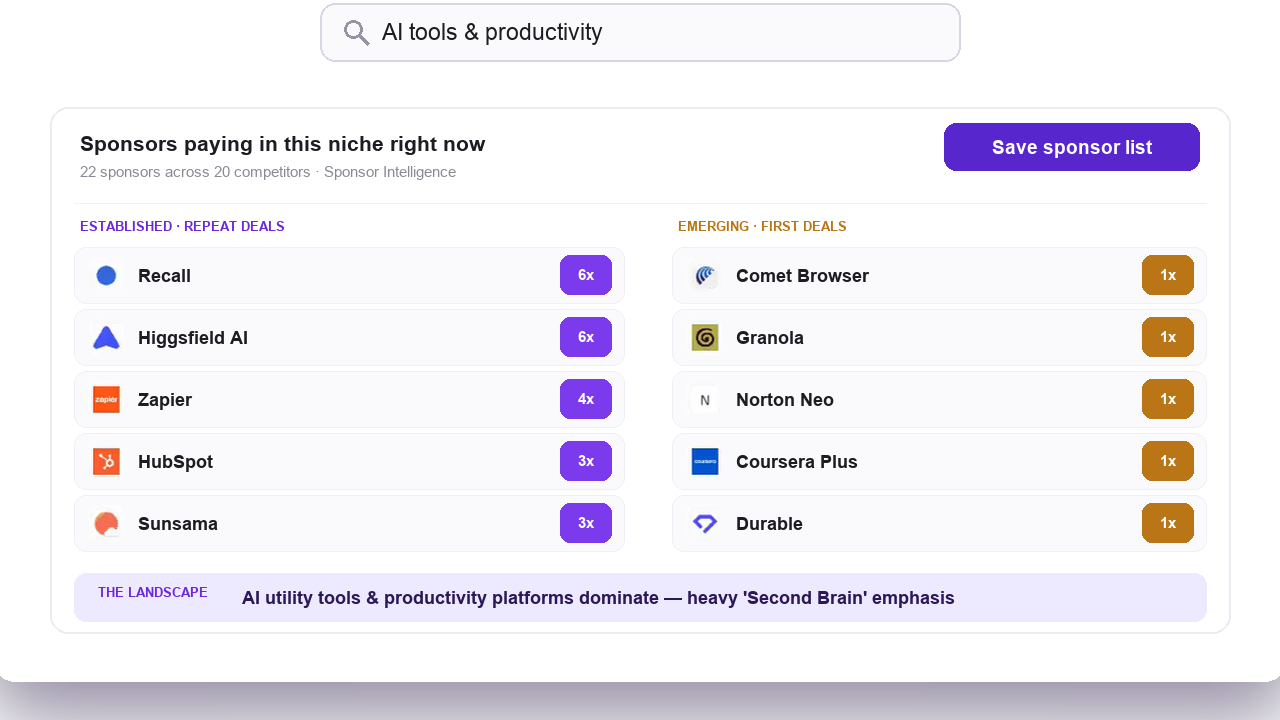
Outbound discovery. Sponsor Intelligence shows established sponsors (with frequency) and emerging sponsors actively buying in your niche.
Monetization Beyond Sponsorships
Sponsorships are typically the largest line in a creator's revenue mix, but they sit alongside owned-product funnels: courses, lead magnets, affiliate stacks, and community memberships. OutlierKit's Funnels & Monetization view shows how creators in any niche balance sponsorships against their own products.
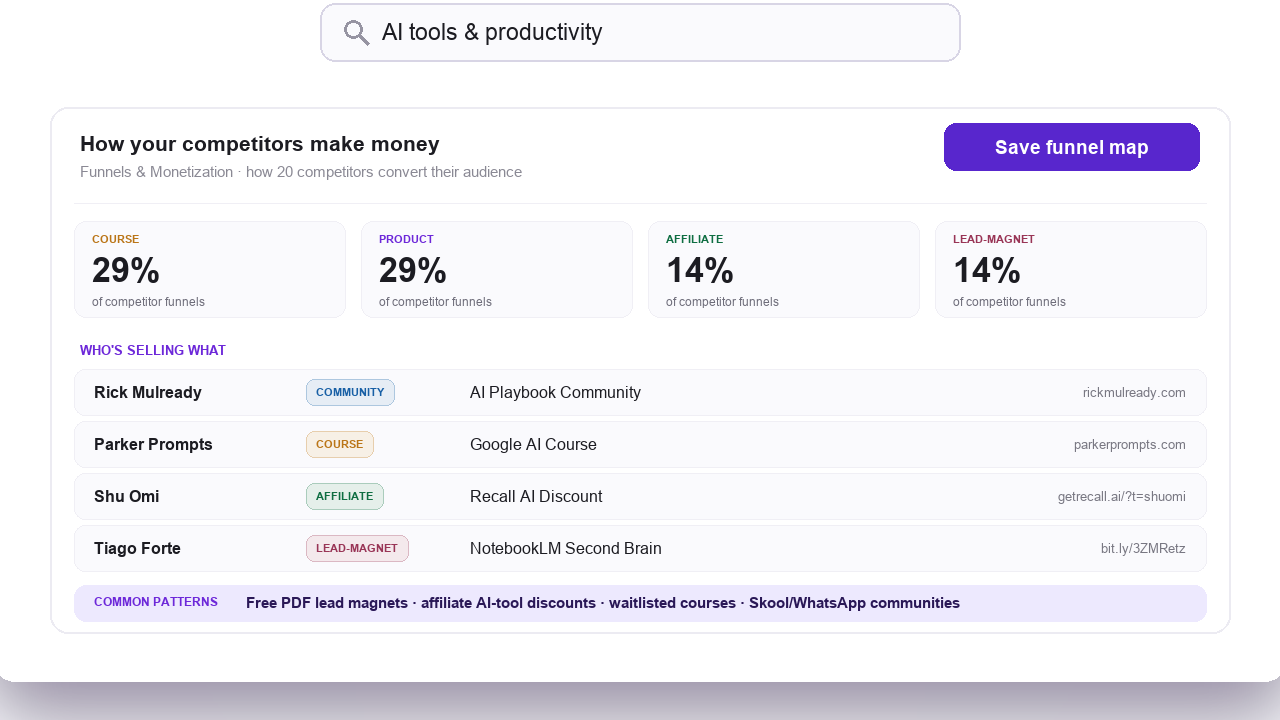
Sponsorships sit inside a wider monetization stack. Course, product, affiliate, and lead magnets all interact with sponsorship rates and exclusivity terms.
Frequently Asked Questions
What is a YouTube sponsorship?
A YouTube sponsorship is a paid partnership between a YouTube creator and a brand. The creator promotes the brand's product or service in exchange for payment, free product, affiliate commission, or a combination. Sponsorships can take many forms. These include dedicated videos, mid-roll integrations, affiliate partnerships, and long-term ambassador deals. FTC disclosure rules govern them all, so the creator must clearly mark the content as sponsored.
How does YouTube sponsorship work?
A YouTube sponsorship typically works in five stages. First comes discovery, where the brand finds the creator or the creator finds the brand. Second is pitch and negotiation, where both sides agree on deliverables, format, and price. Third is the contract, which documents usage rights, exclusivity, payment terms, and FTC disclosure. Fourth is production and approval: the creator produces the video and the brand reviews it against the agreed talking points. Fifth is publication and payment. The video goes live with disclosure, and payment processes on agreed terms (typically Net 30).
What is the difference between a YouTube sponsorship and an ad?
A YouTube ad is bought through Google Ads and inserted by YouTube's ad system. The creator does not produce or endorse it. A YouTube sponsorship is paid directly to the creator. The creator produces the content and personally endorses the product. Sponsorships are creator-led and require FTC disclosure. Ads are platform-served and marked as ads automatically. Sponsorships are widely credited with converting at 3-10x the rate of standard ads (an industry rule of thumb, not a benchmarked study) because of the trust the creator brings.
How much does YouTube sponsorship cost in 2026?
YouTube sponsorship costs in 2026 range from $50 for a nano-influencer integration to $250,000+ for a dedicated video from a top-tier creator. The standard rate is $15-$40 CPM (cost per 1,000 views) for an integration. Niche modifiers matter a lot. Finance and B2B SaaS pay 1.5-2.5x the baseline. Lifestyle and entertainment pay 0.7-1.0x. See the full breakdown in YouTube Sponsorship Rates 2026.
What is YouTube BrandConnect?
YouTube BrandConnect is YouTube's native sponsorship marketplace, integrated directly into YouTube Studio. It matches eligible creators (10K+ subs, monetization-enabled) with brands looking for sponsored content. BrandConnect handles contracts, payments, and FTC disclosure automatically. There is a trade-off versus direct deals. BrandConnect rates are typically lower than what creators can negotiate directly, and YouTube takes a service fee.
Do YouTube sponsorships need to be disclosed?
Yes, YouTube sponsorships must be disclosed under FTC rules in the United States. Equivalent regulations apply in the UK (ASA), the EU (DSA), and most major markets. Disclosure must be clear and conspicuous. Usually that means a verbal mention on-camera, the words ‘sponsored’ or ‘ad’ in the title or first line of the description, and toggling YouTube's built-in ‘includes paid promotion’ checkbox during upload. Failing to disclose can result in fines for both creator and brand.
What is a paid sponsorship on YouTube?
A paid sponsorship on YouTube is any partnership where the creator gets money, free product over a nominal value, affiliate commission, or other compensation for promoting a brand. The term separates paid partnerships from organic mentions. In an organic mention, the creator features a product without any commercial relationship. All paid sponsorships require FTC disclosure regardless of compensation type.
How do you find a brand sponsorship for YouTube?
There are four main paths to find a YouTube brand sponsorship in 2026. The first is inbound, where brands reach out. This is typical only above 100K subs. The second is marketplaces, such as YouTube BrandConnect, Grapevine, and Channel Pages, which match creators and brands. The third is agencies, where talent managers and influencer agencies place creators with brands. The fourth is outbound. Here creators reverse-engineer who already sponsors their niche using tools like OutlierKit Competitor Studio Sponsor Intelligence, then pitch directly. Outbound is the fastest path for channels under 100K subs.
Can small YouTube channels get sponsored?
Yes, small YouTube channels (under 10K subs) can get sponsored. The deal types skew toward product-for-content, affiliate partnerships, and small flat fees ($50-$500) rather than large brand-awareness campaigns. Nano-influencers (1K-10K subs) deliver 7-10% engagement rates, the highest of any tier. That makes them attractive to performance-focused brands and emerging startups looking for authentic niche reach.

See exactly who sponsors creators in your niche
Run a Sponsor Intelligence report in OutlierKit Competitor Studio to find every brand that has paid creators near your size, both established and emerging, with frequency counts.
Try OutlierKit FreeContinue Reading
YouTube Monetization Strategies (Pillar)
All 11 ways YouTube channels make money in 2026.
Make Money on YouTube Without Monetization
8 ways to earn before YPP eligibility.
The Most Common YouTube Sponsors by Niche
Real Sponsor Intelligence data across 8 niches.
The Full List of YouTube Sponsors
60+ brands, filterable by category and channel size.
How to Get YouTube Sponsorships in 2026
Tactical playbook including a small-channel shortcut.
YouTube Sponsorship Rates 2026
What to charge by niche, subs, and CPM.
Best YouTube Sponsorship Platforms & Agencies
Honest review of every major platform.
How to Spot a Fake YouTube Sponsorship Offer
10 red flags in 2026.
Nano-Influencer Sponsorship Rates & Guide
Deep dive on the 1K-10K subscriber tier.